
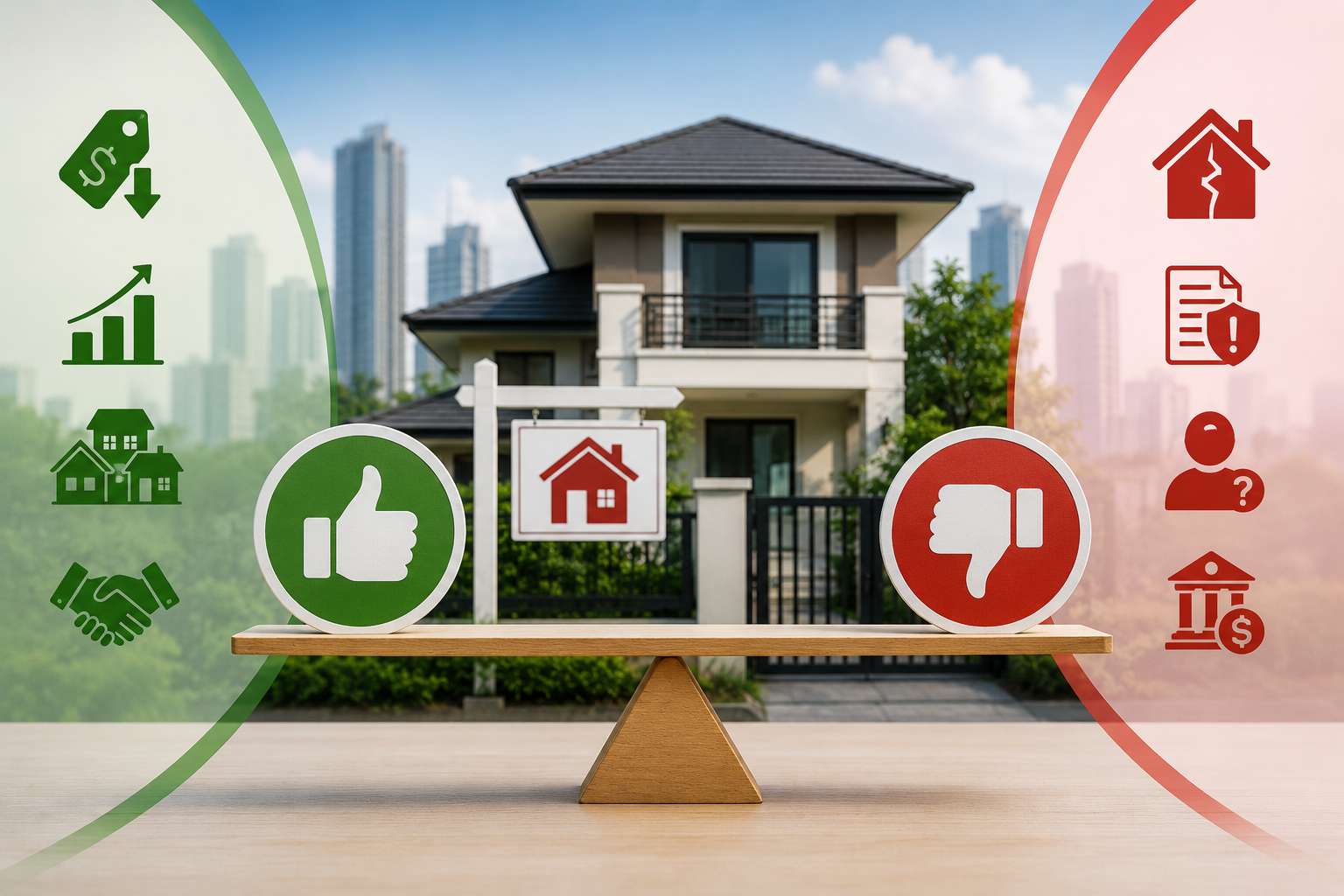

A foreclosed property is a property repossessed by a bank because the original borrower failed to pay their loan. The bank then sells the property to recover their losses. While these properties are often marketed as “great deals,” understanding both sides is critical. Because of this, the buying process is very different from a typical real estate purchase.
ADVANTAGES OF BUYING FORECLOSED PROPERTIES
1. Lower Purchase Price Compared to Market Value
This is the number one reason why most buyers consider foreclosed properties.
Banks are not real estate developers. They do not want to hold properties for a long time because these are considered non-performing assets. So their goal is simple: sell fast, recover money, and move on.
Because of this, properties are usually priced below market value sometimes significantly lower depending on how long the property has been in their inventory. If a similar house in the area is selling for ₱3 million, a foreclosed property might be offered at ₱2.2M–₱2.6M.
Why is this advantageous to you?
- You immediately gain built-in equity
- You have room to resell at a profit
- You can afford a better location or bigger property within your budget
Expert tip:
Always compare prices within the same area. The real advantage comes from knowing how much lower the bank’s price is compared to the actual market.
2. Flexible Payment Terms from Banks
Many people think foreclosed properties are “cash only” but that’s not true. Banks often provide structured payment options to make these properties easier to sell.
These may include:
- Low down payment options (sometimes 10%–20%)
- Installment plans for the down payment
- Long-term financing (up to 20 years or more)
- Occasional promos like waived fees or discounts
You don’t need to be extremely wealthy to buy one. You just need to be financially prepared and properly guided. Instead of paying ₱2M cash, you may only need around ₱200K–₱400K upfront, then pay the rest monthly.
Strategic advantage:
You can leverage the bank’s financing to acquire an asset without exhausting your savings.
3. Wide Variety of Property Options
Banks handle thousands of foreclosed properties across the country. This means you are not limited to one type of property.
You can choose from:
- Condominium units (good for rental income)
- House and lot (ideal for families)
- Townhouses (affordable starter homes)
- Vacant lots (long-term investment)
- Commercial properties (business use or leasing)
Why this is important:
You can align your purchase with your specific goal, whether it’s:
- Living in it
- Renting it out
- Flipping it for profit
Unlike developers who sell in one project, banks allow you to compare different locations and property types at the same time.
4. Clean Ownership Transfer (When Buying Directly from Banks)
One of the biggest fears in real estate is dealing with problematic titles.
When you buy from a bank, in most cases:
- The bank has already foreclosed and consolidated ownership
- The previous loan is already settled or absorbed by the bank
- The title is prepared for transfer to the new buyer
Why this reduces your risk:
You are not dealing with unpaid mortgages from the previous owner. However, “Clean” does not always mean zero issues. There may still be:
- Unpaid association dues
- Real property tax arrears
Always request a title verification and property history check.
5. Strong Investment Potential
This is where foreclosed properties really shine. Because you are buying at a discounted price, you have more flexibility to:
- Renovate and sell (property flipping)
- Rent out for monthly income
- Hold for long-term appreciation
Example:
You buy a foreclosed property at ₱2M
Renovation cost: ₱300K
Total investment: ₱2.3M
Market value after improvement: ₱3M
That’s a potential ₱700K gain!!
Why investors love this:
The lower your acquisition cost, the higher your return on investment (ROI).
DISADVANTAGES (WITH PRACTICAL SOLUTIONS)
Now let’s go deeper into the risks because this is where many buyers fail.
1. “As-Is, Where-Is” Condition
This means the bank sells the property exactly as it is. No repairs. No cleaning. No guarantees.
What you might encounter:
- Broken doors/windows
- Leaks or structural damage
- Outdated interiors
- Missing fixtures
Why this can be risky:
If you don’t inspect properly, your repair costs can become very high.
How to manage this:
- Always inspect the property personally
- Bring a contractor or engineer if possible
- Prepare a renovation budget buffer (at least 10%–20%)
How this becomes an advantage:
Because many buyers avoid “damaged” properties, you face less competition. With proper renovation, you can significantly increase the property’s value.
2. Occupied Properties
Some foreclosed properties are still occupied. When a property is foreclosed by a bank, it simply means the ownership has shifted to the bank due to unpaid loans. However, physical possession of the property is a completely different matter.
This can be:
- The previous owner
- Tenants
- Informal settlers
Why this is a serious concern:
You cannot immediately use or renovate the property.
Possible challenges:
- Legal eviction process
- Emotional confrontation
- Delays in possession
How to manage this properly:
- Always ask: “Is the property occupied or vacant?”
- If occupied, consult a lawyer before buying
- Consider offering financial assistance for relocation (often faster than legal eviction)
Turning it into an advantage:
Occupied properties are usually priced even lower, giving you a chance to secure a better deal.
3. Hidden Costs and Additional Expenses
Many first-time buyers focus only on the price but that’s a mistake. The advertised price is simply the selling price of the property, but acquiring ownership involves several mandatory additional expenses.
Additional costs may include:
- Documentary Stamp Tax
- Transfer Tax
- Registration Fees
- Notarial Fees
- Unpaid association dues
- Real property tax arrears
Your ₱2M property might actually cost ₱2.2M–₱2.4M total.
How to manage this:
- Request a complete cost breakdown from the bank
- Ask: “What charges will I shoulder?”
- Set aside extra funds (buffer budget)
Once you fully understand the total cost, you can properly compare it with market value and still secure a good deal.
4. Limited Access for Viewing
Though this seldom happens, some properties cannot be viewed inside, especially if occupied.
Why this is risky:
You are making a decision without seeing the full condition.
How to reduce risk:
- Inspect the exterior and surroundings
- Talk to neighbors for insights
- Research similar units in the area
- Work with a broker who has access or experience
When “Limited Access for Viewing” Is NOT Much of a Concern
- When You Are Buying Primarily for the Land Value
- When the Property Price Already Reflects the Risk
- When You Have a Strong Renovation Budget and Strategy
- When You Can Assess the Property Indirectly
- When You Are an Experienced Buyer or Investor
Hidden advantage:
Less visibility means fewer buyers competing, which increases your chance of securing the property.
5. Longer Processing Time
Buying from a bank is not instant.
It involves:
- Submission of documents
- Credit evaluation
- Approval process
- Title transfer
Why this can be frustrating:
Processing can take weeks to months. When you buy a foreclosed property, you are not just dealing with a seller you are dealing with a bank’s system, and that system is designed to be thorough, structured, and risk-controlled, not fast.
How to manage expectations:
- Prepare all documents early
- Follow up regularly
- Work with a licensed broker who is experienced in bank transactions
Positive side:
This process ensures everything is properly documented and legally secure, protecting you in the long run.
6. Strict Loan Approval Requirements
Banks will carefully evaluate your:
- Income stability
- Employment status
- Credit history
- Existing debts
Risk:
Your loan might be denied.
How to improve your chances:
- Maintain a good credit record
- Avoid excessive debt before applying
- Complete all required documents
- Consider getting pre-approved
Why this is actually beneficial:
It prevents you from buying a property you cannot afford, protecting your financial future.
How to Approach Foreclosed Properties the Right Way
Buying a foreclosed property is not just about finding a cheap deal, it’s about understanding the process, managing the risks, and making informed decisions.
If you handle it correctly, you can:
- Save money
- Build wealth
- Secure a valuable asset
But if you rush or skip due diligence, it can become stressful and costly.
That’s why working with a licensed broker experienced in foreclosures is one of the smartest decisions you can make. It helps you avoid common mistakes and ensures you maximize every opportunity.